
22000 mounts can be used in static or mobile applications, such as:pumps, compressors, generators, electronic equipment, HVAC equipment, engines with internal combustion, transmissions, plant cabs, radiators, etc.
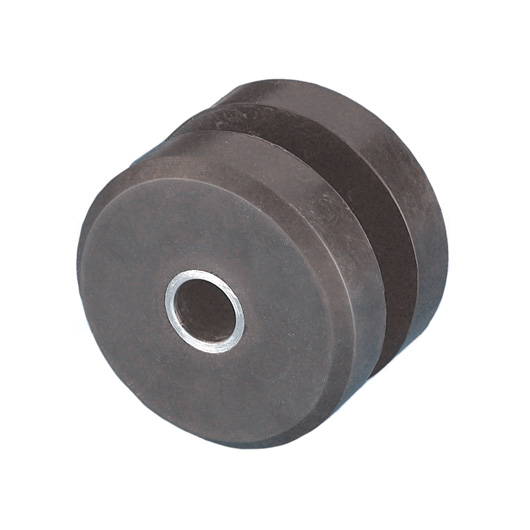
22000 mount
The 22000 mount is made of two parts of elastomer bonded to a central tube.
– Interior reinforced: cylindrical tube.
– Elastomer: chloroprene. Range of five different stiffnesses.
Download PDF catalog
Related products
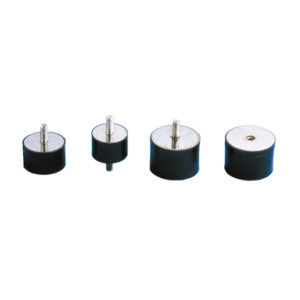
Radiaflex®
Read more
The work in shear of these plots lends itself very well to the vibratory isolation.
– Metalwork: Mild steel, plated.
– Natural rubber, bonded, cylindrically shaped.
– Welded fixings: 5 styles (single sided threaded stud, single sided threaded hole, double threaded stud, double threaded holes, combination fixing).
In Europe, we often use different screw standards than our french standard.To better satisfy this need, Paulstra has created a new range TRadiaflex Europe. This range is available with the 4 usual welded fixings and with a new fixing: the threaded hole stop.
Download PDF catalog
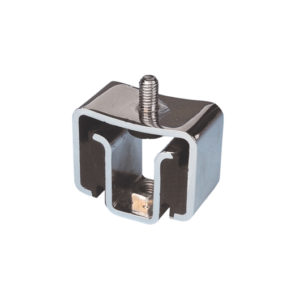
Traxiflex®
Read more
Comprises two metallic U armatures joined by two bonded rubber blocks.
The TRAXIFLEX mounting comprises two metallic U armatures joined by two bonded rubber blocks.
It is available in two versions: male/female and female/female.
Download PDF catalog
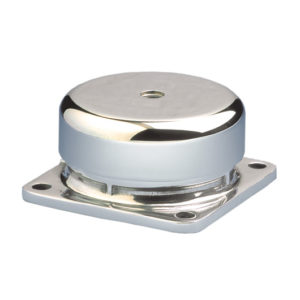
Stabiflex
Read more
It is formed by a rubber ring attached to two metal reinforcements.
The STABIFLEX mounting comprises a conical rubber section bonded between inner and outer metal parts.
– Centre axis with threaded hole.
– Square (4 holes) or diamond base (2 holes) with clearance hole.
– Bonded natural rubber, anti-slip bead.
– Cup to protect the rubber and distribute the load.
Download PDF catalog
Nivofix®
Read more
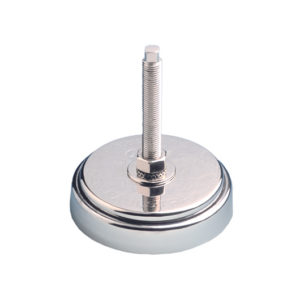
Adjustable machine foot formed by a circular armor.
The NIVOFIX mounting is an adjustable equipment foot comprising a circular disc bonded to a protected elastomer base. An adjustement screw is fitted into the assembly.
The elastomer base has anti-slip ridges.